Must See Art Exhibitions
Norton Simon Museum in Pasadena
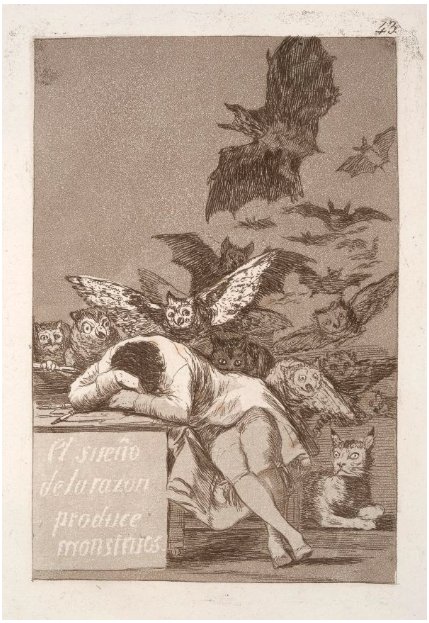
I Saw It: Francisco de Goya, Printmaker presents the Spanish artist’s four major print series in their entirety: Caprichos (1799), Desastres de la Guerra (c. 1810–15), La Tauromaquia (1815–16) and Los Disparates (c. 1815–23). Select impressions from trial and working proofs, as well as hand-colored and later editions, offer insights into the artist’s creative process and the full range of his expressive capacity in a variety of print techniques. This is the first comprehensive installation of Goya’s iconic suites on the West Coast, and it is drawn exclusively from the renowned collection of this material in the Norton Simon Museum.
The exhibition’s title—in Spanish, Yo lo vi—derives from Goya’s own inscriptions for two of his prints. In the literal sense, it conveys Goya’s engagement with printmaking as a way in which to chronicle and remark on the history and culture of his country and his relationship to it. Figuratively, the title acknowledges the artist as a visionary and as an inventor of caprices, in which his satirical and even strange images capture attention and appeal to the viewer’s emotions.
In witty, haunting and often raw narratives, Goya critiqued the abuse of power, both religious and political, his country’s prejudices and superstitions and the brutality of war. His complicated and sometimes baffling imagery is explored in separate sections that highlight the fantasy, invention and compassion that characterize his subjects, as well as his artistry in etching and aquatint. These areas are punctuated with related works by modern and contemporary artists, including Leon Golub, Pablo Picasso and Andy Warhol, who, like Goya, felt compelled to address injustice and suffering in their art.
On View Through August 5th
source:https://www.nortonsimon.org/exhibitions/2020-2029/i-saw-it-francisco-de-goya-printmaker/#
Hammer Museum
Only the Young: Experimental Art in Korea, 1960s–1970s
EXHIBITION TOUR (lead by the artist): Kyungmi Shin
Wednesday, March 20th, 6 PM
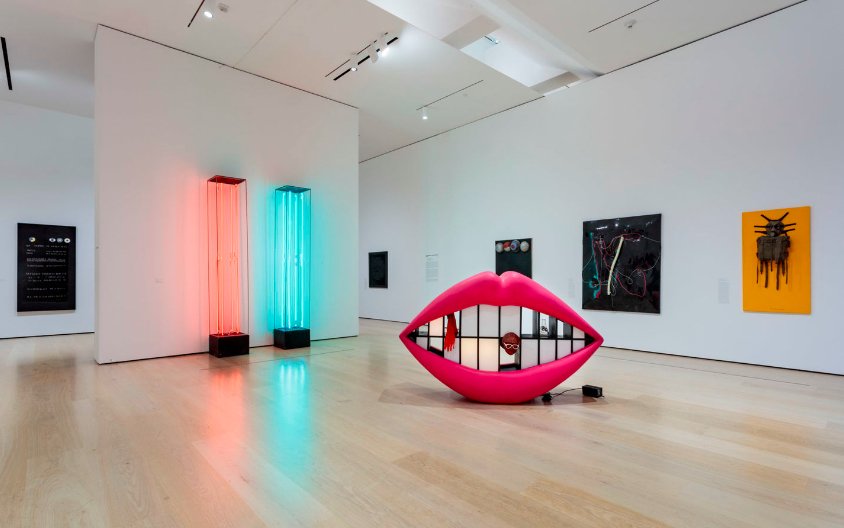
Only the Young: Experimental Art in Korea, 1960s–1970s is the first North American exhibition to explore the groundbreaking work of a generation of artists who emerged in the decades following the Korean War (1950–53). The exhibition offers unprecedented insight into a moment in which artists in Korea began to take a stance against what they saw as a limiting approach within the local art world and instead embraced innovative and often provocative practices.
Dissatisfied with the abstract style that dominated the work of the Korean art establishment, these young artists sought new modes of artistic production that would be capable of capturing their dissonant and rapidly changing realities. Confronting a period of intense cultural transition, they worked both collectively and as individuals in pursuit of an artistic process whose complexity could meet the rapidly evolving social and political landscape of the newly formed Republic of Korea (commonly known as South Korea), grappling with its colonial past and a present that witnessed rapid industrialization and an influx of foreign goods. Taking up an expanded, transdisciplinary approach to their creative output, these practitioners adopted mediums such as assemblage, installation, and happenings and employed industrial materials and new technologies. Their engagement with the new provided a framework to produce art at the forefront of the global avant-garde while remaining embedded within their local contexts. This generation lost momentum in the late 1970s but would gain wider recognition in the early 2000s, when the art historian Kim Mikyung revisited the period, referring to their movement as “experimental art.”
Featuring nearly eighty works and archival materials, Only the Young centers a moment of unprecedented creative energy in South Korea’s art history as the country’s culture experienced a sea change. The works in the exhibition exemplify the radicality, irreverence, and play that have given artistic production during this time its lasting impact on the country’s art community. As a whole, they demonstrate an unwavering commitment to art as a living historical document and posit the artist as capable of reimagining the world around them.
resource: https://hammer.ucla.edu/exhibitions/2024/only-young-experimental-art-korea-1960s-1970s

Art Fairs
January – FOG Design+Art (San Fransico)
February- ZONAMACO, Material Art Fair (Mexico), 1-54 (Marrakesh), Frieze, Felix Art Fair (Los Angeles)
March- Art Basel (Hong Kong)
April- La Biennale de Venezia (Venice)
May- Freize, NADA, TEFAF, 1-54 Contemporary African Art Fair (New York)
June- Art Basel (Basel)
+++ and more